


How to Prevent Birds from Hitting Your Windows: A Complete Guide for preventing bird window strikes.

If you've spent any time watching birds in your backyard, you've probably experienced that heart-stopping moment: a sudden thud against your window, followed by the sight of a stunned bird on the ground below (or even worse). It's one of the most distressing experiences for any bird lover, and unfortunately, it's far more common than most people realize.

The good news? Bird Window strikes are largely preventable.
With a few simple modifications, you can make your windows visible to birds while still enjoying the views that drew you to those windows in the first place.
Let's talk about why these bird window-strikes happen and what we can do about to prevent it so your birds can remain safe and healthy!
Why Do Birds Hit Windows?

To understand the solution, we first need to understand the problem. Birds hit windows for two main reasons, and neither has anything to do with intelligence.
The first reason why birds hit windows: reflection
The most common cause of window strikes is that they see reflections of their surrounding environment. They see a perfectly reflected image of the sky, trees, and habitat behind them. From a bird's perspective, that reflected tree looks like a real tree they can fly into for safety.
This is especially problematic in our wooded West Cobb neighborhoods. Many of our homes back up to mature trees, and those beautiful large windows offer birds a seemingly perfect flight path to what appears to be continuous forest, more lawn and shrubs or even a bird feeder that is actually behind them.
Even worse, Cooper's Hawks, Sharp-shinned Hawks and other bird-hunters will sometimes fly into the yard very low and fast, barely clearing the fence and coming right for the bird feeders. The birds take off quickly, scattering for their lives and looking for safety. They will aim for that reflection in a moment of haste just to be knocked down by an invisible wall - and Cooper will scoop up the easy meal, and come back the following week to try again.

The second reason birds hit windows: transparency or the false passage
The second cause is windows that appear see-through. Corner windows, glass balcony railings, and windows on opposite walls of a room can create the illusion of an open passageway. A bird flying toward your house sees what looks like a clear path right through your home.
This is a pretty common issue with sliding glass doors and large picture windows, especially when you have windows on multiple walls of the same room.
The Sobering Statistics

Bird-window collisions are one of the leading causes of bird mortality in North America, second only to cats. (Cats capturing and killing birds, not flying into windows of course). According to research published by the Smithsonian Conservation Biology Institute and the U.S. Fish and Wildlife Service:
Up to 1 billion birds die from window strikes in the United States each year
Residential homes are responsible for about 44% of all bird-window collision deaths
Most collisions occur at windows on the first three floors of buildings
Window strikes affect virtually all species, from tiny Ruby-throated Hummingbirds to medium and large hawks.
For those of us in the Southeast, this is particularly concerning. We're located right smack in-the-middle of major migratory paths, which means twice a year - Spring and Fall - billions of birds pass through our region. During these peak migration periods, the risk of window strikes increases dramatically.
Window Bird Strike Solutions Ranked by Effectiveness
Not all window treatments are created equally. Here's what actually works, ranked from most to least effective based on ornithological research and real-world testing.
Bird Strike Solution #1. External Window Films and Decals
The most effective solutions work on the outside of your glass, where birds can actually see them. Internal treatments are less visible to approaching birds because of exterior reflections, tint and uv protecting films designed to save energy in your home.
WindowAlert Decals are a popular and affordable option. These translucent decals are coated with a UV-reflective finish that's highly visible to birds (who can see UV light) but barely noticeable to humans. Take a look at the WindowAlert 4-pack and the reviews on Amazon are pretty impressive. 4.3 stars with over 12,100 reviewers.

How to use window clings, films and decals to prevent bird strikes:
Clean the glass, and place them on the exterior of your windows
Replace annually, as UV coating degrades over time
For the best results, cover the windows pretty generously.
Older recommendations were to apply decals no more than 4 inches apart, however, this recommendation was updated by multiple expert sources to minimize the gaps between the decals to 2 inches, specifically to protect smaller birds like finches, sparrows, warblers, and even hummingbirds, that may try to fly through tighter gaps to avoid predators!
Additional WindowAlert patterns are available:
Decorative static-cling window films are another excellent option. These create a visible pattern across your entire window surface, which visually eliminates any gaps birds might try to fly through normally.
Amazon Link ->: Rabbitgoo Decorative Window Film

Pro tip: When choosing decals, any visible pattern works - birds don't care if it's snowflakes, leaves, or geometric shapes. What matters is coverage and visibility from the outside. Most of these products are designed to attract you, the consumer, to purchase them - but at the same time solve the immediate problem (bird strikes).
2. Bird window-strike reducer: UV Reflective Tape
UV Reflective Bird tape applies the same UV-reflective principle as decals but in a versatile tape format. You can create your own patterns with the tape - horizontal or vertical stripes work well - and adjust coverage as needed. We love this idea a little less just because of the naming/branding - "Bird Scare" and "Bird Removal" but in reality we just want to prevent them from hitting the glass and getting injured or killed. The tape works though and many options are available. To us, it looks much more "tacky" and is not something we would want on our home.
The key is applying tape on the exterior of windows with stripes no more than 2 inches apart horizontally or 2 inches apart vertically.
Amazon: De-Bird Scare Tape Roll (350ft)
Application tip: Clean your windows first for better adhesion. Apply tape horizontally every 4 inches, or create a grid pattern for maximum effectiveness.
3. Screens and Netting
Old-fashioned window screens are surprisingly effective as bird deterrents. They break up reflections and make the window visible as a solid barrier. Even if they do manage to fly full-steam ahead, right into your window screen, you may have a mildly confused bird instead of one with a broken wing or worse. If you have removable screens, keep them installed year-round - your birds will thank you.
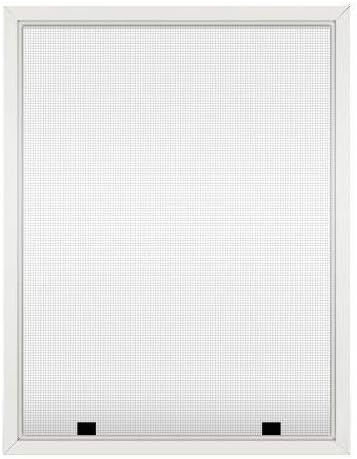
Windows screens can be ordered by standard sizes for $49 or less per screen right off the Amazon site. Link
4. Strategic Feeder Placement
Here's something many birders don't realize: Bird feeder placement dramatically affects window collision risk.
The safest zones for feeders are:
Within 3 feet of windows - Birds don't have enough distance to build up dangerous speed
Beyond 30 feet from windows - Far enough that birds approach windows slowly and have time to see them
The danger zone is between 3-30 feet from windows. At this distance, birds are flying much faster and may not have time to recognize windows or doors and avoid the glass.
If you have feeders in that 3-30 foot danger zone, consider moving them closer or farther from your windows. It's one of the simplest and most effective changes you can make.
What to Do If a Bird Hits Your Window
Despite our best prevention efforts, window strikes sometimes happen. Here's what to do if you find a stunned bird.
Immediate Assessment
First, observe from a distance. Many birds do recover on their own within a few minutes. Watch for the following behaviors:
Movement of the head or feet
Blinking
Attempts to stand
If the bird appears dead (no movement, eyes closed, not breathing), wait 15-20 minutes before assuming the worst. Birds can be deeply stunned and appear lifeless but recover.
If the Bird Is Alive but Stunned
1. Put on gloves - This protects both you and the bird
2. Gently pick up the bird - Support its body with one hand, wings tucked naturally
3. Place it in a ventilated box - A cardboard box with air holes, lined with a soft towel, works well
4. Keep it dark and quiet - Place the box in a warm, quiet location away from pets and children
5. Wait 1-2 hours - Check on the bird periodically
Most stunned birds recover within an hour or two. When the bird is alert and actively trying to escape the box, take it outside to release. Open the box (preferably near some trees or shrubs) and let it fly away on its own.
When to Seek Help
Contact a licensed wildlife rehabilitator if the following is true:
The bird has visible injuries (blood, drooping wing, twisted neck)
It hasn't recovered after 2 hours
It seems unable to fly when released
The Georgia Department of Natural Resources maintains a list of licensed wildlife rehabilitators. We took a look at the list and have provided the info below for the great Metro-Atlanta area, there are only a handful of locations available and their "coverage" of animal types is very specific to the individual location. For example, some will only accept squirrels. Some will accept birds, but only raptors, others only waterfowl. Here is what you need to know:
Songbirds only: Wild Nest Bird Rehab: Decatur, Georgia. call (404) 969-2324
All native wildlife: AWARE Wildlife Center: Lithonia, Georgia. call (678) 418-1111)
Raptors only: Chattahoochee Nature Preserve: Roswell, Georgia. call (770)992-2055 Extension 239
Raptors and Waterfowl: Bells Ferry Veterinary Hospital: Acworth, Georgia. call (770) 926-5311
Songbirds only: Wildlife Center of North Georgia: Acworth - Temporarily closed as of May 14, 2026
Important: Do not try to feed the bird or give it water. Stunned birds can aspirate liquids, and improper feeding can cause more harm than good.
Seasonal Considerations: Migration Means More Strikes
In West Cobb (and across the Southeast, Bird window strikes follow a very predictable seasonal pattern. Understanding this can help you be prepared.
Peak Risk: Spring Migration (March - May)
Spring migration brings millions of birds through Georgia. Species like warblers, tanagers, grosbeaks and thrushes are moving north to breeding grounds, often traveling at night and being unfamiliar with our neighborhoods.
This is when you'll see the widest variety of species - and unfortunately, when you're most likely to find migrants stunned beneath your windows.
Second Peak: Fall Migration (September - November)
Fall migration is even bigger than spring, as adults are joined by young-of-the-year birds. These inexperienced juveniles are especially prone to window strikes.
If you only implement window protection seasonally, fall is the most critical time. September and October are peak collision months across the Southeast.
Year-Round Risk
Even outside of the 2 major migrations, window strikes can occur year-round. Our resident birds - Cardinals, Chickadees, Wrens, Robins and Blue Jays - can and do hit windows, especially if feeders are poorly placed or territorial males are fighting their own reflections.
Special Cases Worth Noting
Cardinals Fighting Reflections
Have you noticed a Cardinal constantly, obsessively attacking your window, especially in spring? This isn't a window strike - it's a territorial male fighting his own reflection. He sees "another male" in his territory and attacks.
While not as immediately dangerous as full-speed strikes, this behavior can cause exhaustion and minor injuries. Cover the exterior of the affected window temporarily, and the behavior usually stops once the bird no longer sees his reflection.
Hummingbirds and Glass
Ruby-throated Hummingbirds are particularly vulnerable to window strikes during migration. Their tiny size means impacts are usually fatal. If you have hummingbird feeders, apply window treatments to all nearby glass.
AFFILIATE PLACEHOLDER - Amazon: Hummingbird Feeder Window Decals
Large Picture Windows
Floor-to-ceiling windows and sliding glass doors are the most dangerous windows for birds. These large expanses of glass reflect more habitat and create larger "false passage" illusions. Consider these windows your first priority for treatment. Even partial coverage - a row of decals at bird flight height (3-5 feet from ground) - helps significantly.
AFFILIATE PLACEHOLDER - Amazon: Bird Safety Glass Film Roll (36" x 15 ft)
Making It Part of Your Birding Routine
As bird lovers, we have a responsibility to make our hobby as safe as possible for the birds we cherish. Think of window treatments as part of your birding setup, right alongside feeders and bird baths.
Check your windows from the outside on a sunny day. If you can see sky or tree reflections, birds see them too. Those are the windows that need attention first.
This small effort required to bird-proof your windows pays off every day in birds saved - including the Cardinals, Chickadees, and occasional migrant warblers that make our bird-friendly oasis, and yours so special.
-Birds of West Cobb
(Lisa & Dan)
Have you successfully bird-proofed your windows? Found a great product or DIY solution? Share your experience in the comments - your tips could help save a bird in a neighbor's yard.


Comments