


How to Keep Ants Out of Your Hummingbird Feeder: Solutions That Actually Work

Are you tired of finding your hummingbird feeder covered in ants? Here are some proven methods to protect your hummingbird nectar and keep those tiny insect acrobats away for good.
If you've ever walked outside to find your hummingbird feeder swarming with ants, you know the frustration. There's nothing quite as disappointing as watching ants march down your feeder hook while hummingbirds hover nearby, unwilling to approach. Trust us, we've been there plenty of times in our West Cobb birding oasis. Well, at first...

The good news? This is completely solvable. After years of battling ants at our feeders, we've figured out what actually works. Let's get your feeder ant-free as well so you can get back to enjoying these amazing little birds.
---
Why Ants Love Your Hummingbird Feeder
It comes down to one simple fact: ants are hardwired to find sugar, and becuase of that, your hummingbird feeder is basically an ant all-you-can-eat buffet. The standard nectar recipe (4 parts water to 1 part sugar) creates a sweet solution that ants can detect from impressive distances. Once they communicate the location to their colony, you're likely to stumble on a literal highway of ants leading straight to your feeder.
Here in Georgia, our hot, humid summers make this problem even worse. Warm temperatures increase ant activity significantly, and the heat causes feeders to expand and contract, creating drips that attract scouts. Once a scout ant finds the jackpot, hundreds (if not thousands) more will follow.

Why It Matters: Ants Are More Than Just an Annoyance
You might wonder if a few ants are really a big deal. Unfortunately, they are:
Hummingbirds will avoid ant-covered feeders -They don't want to compete with insects for their food source
Ants contaminate and spoil nectar faster - Their bodies break down in the sugar water, creating a less appealing (and potentially harmful) mixture
Dead ants clog feeding ports
This prevents hummingbirds from accessing the nectar at all
Large ant invasions can actually harm hummingbirds
Fire ants in particular can bite and injure these tiny birds
The bottom line: if you want hummingbirds at your feeder, you need to keep the ants out.
Solutions That Actually Work (Ranked by Effectiveness)
1. Ant Moats: The Gold Standard
An ant moat is a small cup that hangs above your feeder and fills with water, creating a barrier ants cannot cross. Elegantly simple and incredibly effective. Ants can't swim, so they hit the water and turn back.

How to use an ant moat:
- Hang the moat between your hook and the feeder
- Fill with plain water (no additives needed)
- Check every few days and refill as water evaporates (which happens quickly in Georgia summers). Also, some birds will find this water source and start drinking from it, including finches, bluebirds, nuthatches and wrens!
- Empty and refill if you see dead ants accumulating (or any sort of slimy/mildewy film forming)
Are you looking for one of the top selling hummingbird feeders with a built-in ant-moat? Here are our picks:
Amazon: Kingsyard 24oz glass feeder WITH an Ant Moat
link here
Or...
The Vintage-styled ant-moat which you can add above any hummingbird feeder (or other nectar feeder like Oriole feeders etc.):
Check out the link here (Pro-tip... this is a 2 pack).
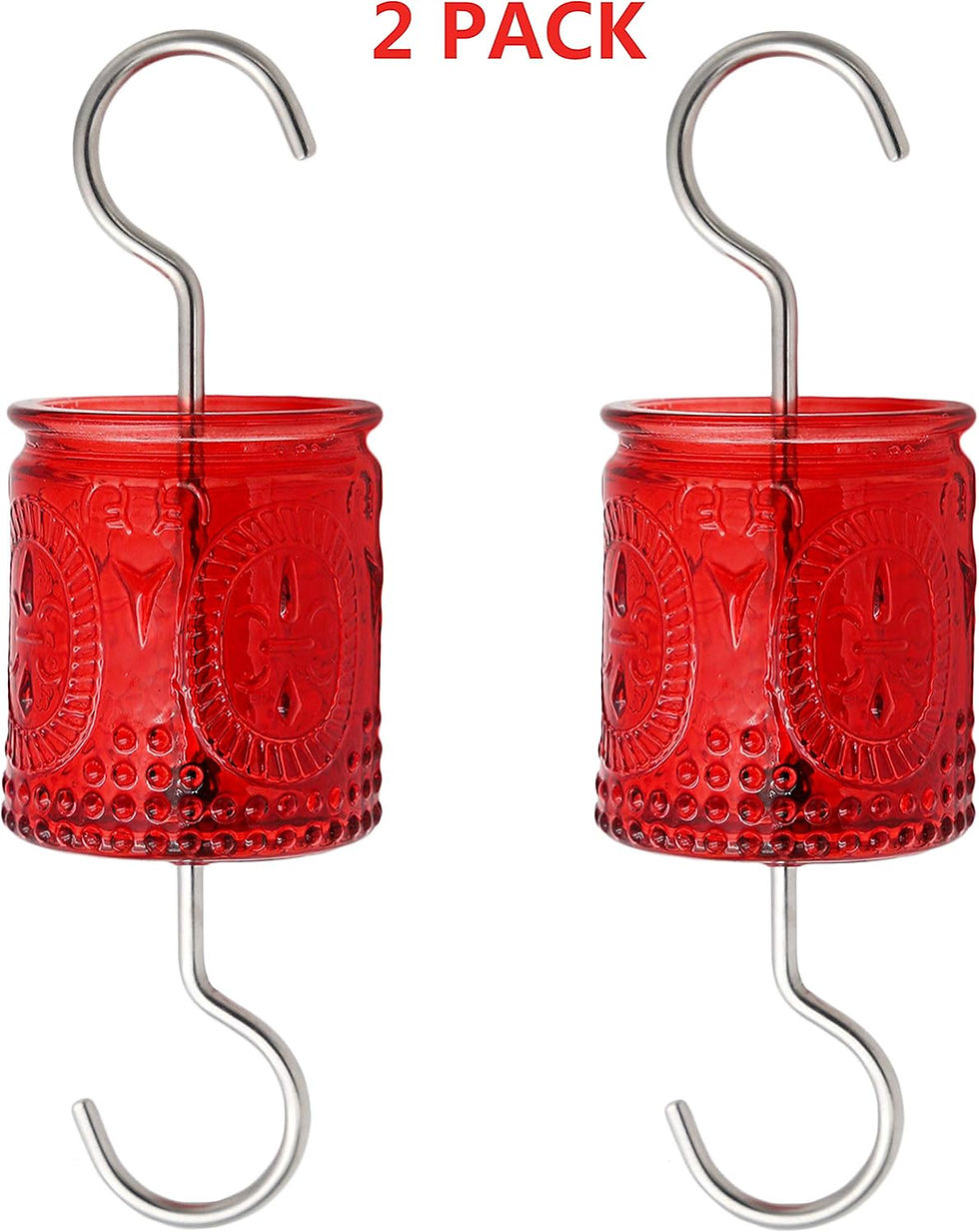
Pro tip: In the peak of summer, we check our moats every other day. The Georgia heat can evaporate that water faster than you'd expect, and a dry moat is useless. When water evaporates, you're essentially reducing the solution making the sweetness more intense. This attracts more ants and if the ratio is too strong (on the sugar-side) you can even cause harm to the hummingbirds!
2. Feeders with Built-In Ant Moats
Why add a separate moat when you can buy a feeder with one built in? This is the route we recommend if you're buying a new Hummingbird feeder anyway. Cost-effective, you'll be (hopefully) pulling the feeder down every 2-3 days anyway to clean out and refill the feeder
The More Birds + is an easy favorite. It's an easy to clean glass feeder with a built in ant moat, and it has several other advantages: it doesn't drip, it's easy to clean, and it's pretty inexpensive - at only $18.99

Another option is this feeder from Kingsyard - it's another 2 pack with glass filling tubes, but also includes yellow drink port "blossoms" and includes the hanging feeder hook included as well. It's a great option to bring the hummingbirds in with a small expense,
3. The Fishing Line Hanging Method
Here's a clever trick that costs almost nothing: hang your feeder using thin monofilament fishing line instead of a chain or hook. The line is nearly transparent, it's pretty slick and ants actually have a hard time walking up/down it to get to the feeder and the nectar within. Online sources recommend 10-20lb test line for this. Keep reading though, because there is one major caveat to this trick.
How to do it:
- Use 10-20 lb test monofilament fishing line
- Tie it securely to your existing hook or shepherd's hook
- Hang your feeder from the line
- Make sure the line is the only path to the feeder (make sure there are no nearby branches, shrubs or salvia leaves touching it, for example)
This method works best in combination with other strategies (make sure that you do have an ant moat in place).
Here's the caveat - UV rays damage fishing line. (Ask any serious fisherman or fisherwoman). Because of this, the strength and even the texture will degrade until it can either snap under the weight of a glass hummingbird feeder, especially with it being half full in the summer heat - or the texture will change and ants will be able to grip it, make it to the nectar and sip it.
4. Relocate the Hummingbird Feeder to avoid the Ants
Sometimes the simplest solution is moving your feeder to a new location. Ants follow scent trails, often tracking the scent on the ground from , so a new spot forces them to start their search over. In a yard where ants are not typically a problem this can work well for a few days. If the wind is blowing a lot the feeder can swing, and this swinging motion can cause drops of nectar to fall to the ground. Ants are quick to track down these droplets, especially in warm weather when they are more active - and then track down the source. So this idea of moving the feeder may become a daily game before you need to try a different solution altogether!
Tips for relocation:
- Move the feeder at least 10-15 feet from its original location
- Choose a spot away from trees, fences, or structures that ants can climb
- Hang from a pole rather than a tree branch if possible get a shepherds hook for hanging the feeder would be a great idea.
- Check that nothing is touching the feeder that ants could use as a bridge
Don't worry about your hummingbirds finding the new location. They're remarkably good at rediscovering feeders, usually within a day or two.
5. Keep Your Feeder Clean and Drip-Free
Just like we mentioned above, drips create a trail that ants will follow. Prevention is half the battle. A feeder that drips nectar is sending an open invitation to every ant in the neighborhood. We are not even kidding - you'll walk outside one day and find an army of ants carrying your feeder off into the woods! OK that may be a little extreme but when you see a few hundred ants you'll get that feeling without question!
Minimize drips by:
- Never fill your hummingbirds completely (liquid expands in heat - we recommend only filling it 1/4 of the way. It needs to be changed often in warmer weather anyway, and if you refrigerate your unused nectar you can make this process faster and easier)
- Checking seals and gaskets for wear (cracks or mold growth)
- Choosing saucer-style feeders (they rarely drip compared to bottle-style)
- Cleaning feeding ports regularly so they don't get sticky
- Wiping down the outside of the feeder when you refill it
What NOT to Do: Methods That Can Harm Birds
In your frustration, you might be tempted to try shortcuts. Please avoid these methods that can harm the hummingbirds you're trying to attract:
Never Use Petroleum Jelly or Grease
This terrible advice still circulates online. Petroleum jelly, Vaseline, or other greasy substances can get on hummingbird feathers. Once that happens, birds can't regulate their body temperature or fly effectively. It can be fatal.
Never Use Insecticides or Pesticides Near Feeders
Spraying bug killer near a feeder that birds eat from is extremely dangerous. Even "natural" pesticides can harm hummingbirds. Keep all insecticides far away from your feeding station.
Avoid Cooking Oils
Some people suggest coating the hook or pole with cooking oil. While less harmful than petroleum jelly, oils go rancid in the heat, smell bad, attract other pests, and can still get on bird feathers. Stick with the water moat method instead.
Summer Maintenance Tips for Georgia Hummingbird Feeders
Our Georgia summers are brutal, and they require some extra attention to your hummingbird feeding routine:
Change nectar every 2-3 days in summer - In temperatures above 90 degrees, nectar ferments quickly. Fermented nectar can make hummingbirds sick.
Clean feeders thoroughly at each refill - Use hot water and a bottle brush. A diluted vinegar rinse works well for stubborn residue.
Keep spare feeders - Rotate between two feeders so one is always clean and ready while the other dries.
Place feeders in afternoon shade - This keeps nectar cooler and fresher longer.
Check ant moats frequently - Evaporation happens fast in July and August.
Homemade Nectar Recipe:
Mix 1 cup white granulated sugar with 4 cups water. Boil briefly to dissolve sugar and remove chlorine, then cool completely before filling your feeder. Never use honey, red dye, or artificial sweeteners.
Avoid the pre-made nectar concentrates - they have preservatives that can harm the hummingbirds long-term.
When to See Hummingbirds in Georgia
Timing matters when it comes to hummingbird feeding in our area:
Ruby-throated Hummingbirds (our primary species) typically arrive in Georgia in mid-March to early April
- Peak activity runs from April through September
- Males often leave first in the beginning of Fall, with females and juveniles following a few weeks later, typically in September and October
- Keep feeders up until at least Early-November to help late migrants
- Occasionally, western species like Rufous Hummingbirds show up in late fall and winter, so consider leaving a feeder out year-round
Having your ant problem solved before peak season means more hummingbirds will visit and return year after year.
The Bottom Line
Ants at your hummingbird feeder are annoying, but they are completely manageable. Our top recommendation: invest in a higher-quality hummingbird feeder with a built-in ant moat (like the Hummingbird + or the Kingsyard feeder 2 pack) or add a separate moat to your existing feeder setup. Combine that with regular squeegee cleaning, strategic (shade) placement, and frequent nectar changes during our hot Georgia summers, and you'll have an ant-free feeding station that hummingbirds will flock to.
A few simple steps and you'll be back to enjoying one of nature's most amazing creatures right in your own backyard.
Happy humming-birding!
Do you have a hummingbird question or did you spot an unusual species at your feeder? We'd love to hear from you in the comments down below!
Thanks for reading! -Birds of West Cobb
@birdsofwestcobb
(Lisa & Dan)


Comments