


How to Discourage Grackles, Starlings, and other "Bully Birds" at Your Feeders

How to Discourage Grackles, Starlings and other Bully Birds at Your Feeders? This blog features some helpful & practical strategies for managing your bird feeder hogs so you aren't tempted to give up on feeding the birds altogether!

You're here because... well, you know the score. You've just filled your feeders with fresh seed, settled into your favorite chair with a cup of coffee, and waited for the cardinals and chickadees to arrive. Instead, a black cloud descends on your yard - dozens of grackles, starlings, and cowbirds that proceed to empty your feeders in twenty minutes flat. This can be frustrating. It is certainly expensive. And it can make you want to take down your feeders completely.

But here's the good news: you don't have to choose between feeding birds and feeding a mob. With the right feeders, seeds, and strategies, you can tip the balance back toward the songbirds you actually want to see - while still coexisting peacefully with the bigger, bossier species.
Let's talk about how we manage the "bully birds" at our Birds of West Cobb feeders.
Meet the Usual Suspects: The "Bully Bird Lineup"
Before we discuss solutions, let's identify who we're dealing with. These are the birds that most commonly dominate feeders in our area:
Common Grackle

Those iridescent black birds with the pale yellow eyes are the most frequent culprits in West Cobb. Grackles are actually native birds and quite beautiful in the right light - their feathers shimmer purple, green, and bronze. But they travel in large flocks, especially during fall and winter, and they're not shy about muscling other birds off the feeder.
European Starling

Starlings are an introduced species (released in New York in 1890 by someone who wanted America to have all the birds mentioned in Shakespeare - seriously). They're aggressive, loud, and will absolutely clean out a suet feeder in a single morning. In breeding plumage, they're speckled white; in winter, they're darker with less speckling.
Brown-headed Cowbird

These smaller blackbirds are infamous for their nest parasitism - laying eggs in other birds' nests - but they're also feeder regulars. Males have brown heads and glossy black bodies. They often travel with other blackbird species.
Red-winged Blackbird

While beautiful (males have those striking red-and-yellow shoulder patches), Red-winged Blackbirds can become overwhelming when they show up in numbers. They're more common near wetlands and waterways, so if you're near a pond or creek in West Cobb, you might see more of these.
Blue Jay (Sometimes)

We hesitate to put Blue Jays in the "bully" category because they're native, beautiful, and genuinely fascinating birds. But there's no denying they can dominate feeders, scare off smaller birds, and eat more than their fair share. We'll include some strategies that work for jays too, though many birders are happy to accommodate them. (They love peanuts, black-oil sunflower seed, and suet nuggets.)
American Robins (Is it just us?)

Robins are some of the most beneficial birds to have in your yard. In the Winter a couple of years ago, we had about 60 Robins discover our feeding zone and brought their family along. This flock thinned in the Spring but many never left. Currently I'd say we still have 10 or 12 Robins that are locals, and now they are bringing their fledglings to feast as well. With a hanging "house style feeder" and 2 plates full of mealworms, they will take over all three and prevent Bluebirds and Warblers among others, from making it to the food.
---
Why Are They a Problem?
Let's be clear: these birds aren't doing anything wrong. They're just being birds - finding food efficiently and feeding their families. The issue is one of scale and compatibility with our birding goals.
They eat a lot.
A flock of 30 grackles can empty a large hopper feeder in a single visit. That gets expensive fast, especially with seed prices what they are.

They travel in large groups.
While a single grackle at your feeder is no big deal, they rarely come alone. Blackbirds and starlings are highly social and often move in flocks of dozens or even hundreds.

They intimidate or bully the other birds.
Many smaller songbirds simply won't approach a feeder when it's surrounded by grackles or starlings. Your cardinals and chickadees may be watching from the bushes, waiting for a turn that never comes.

They can spread disease.
Large concentrations of any bird species at feeders increase the risk of disease transmission. This is especially true of starlings, which can carry histoplasmosis in their droppings.
Solutions That Actually Work
After years of experimentation in our own backyard and hearing from fellow birders across the south, here are the strategies that genuinely make a difference:
1. Caged Feeders (Our Top Recommendation)
Caged feeders are exactly what they sound like: a tube or hopper feeder surrounded by a wire cage. The cage openings are large enough for small birds (chickadees, titmice, finches, small woodpeckers) but too small for grackles, starlings, and jays.
This is the single most effective solution if you want to keep feeding sunflower seed. Smaller birds quickly learn to zip through the cage openings, while larger birds are physically excluded.
Amazon: Woodlink Caged Tube Feeder

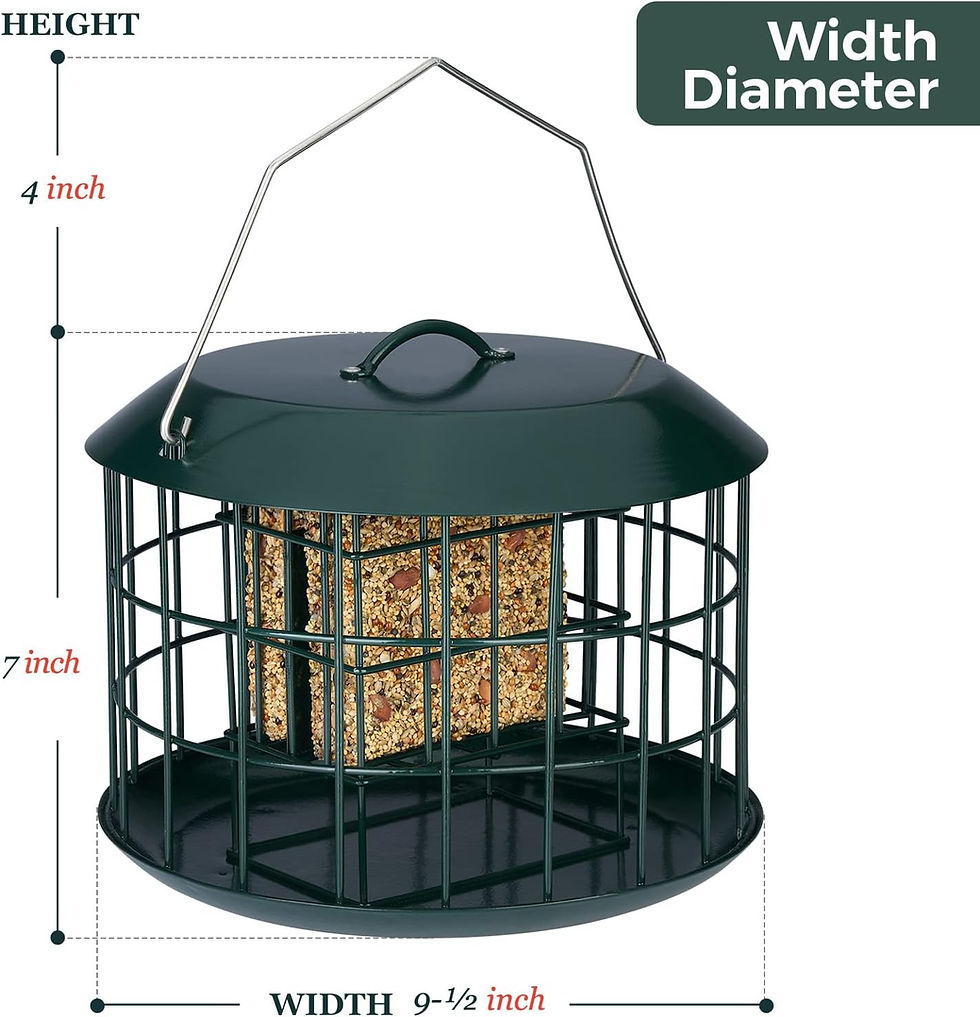
**Pro tip:** Look for cages with 1.5-inch openings. This is the size of the entry hole on a standard Eastern Bluebird house. Smaller birds like Tufted Titmice, Carolina Wrens, Carolina Chickadees, Pine and Yellow-rumped Warblers, Brown-headed and white-breasted nuthatches can all fit inside and get a bite to eat.
2. Upside-Down Suet Feeders
Starlings are suet-destroying machines. A regular suet cage is an all-you-can-eat buffet for them. But here's their weakness: starlings can't cling upside down very well. Woodpeckers, nuthatches, and chickadees? No problem.
An upside-down suet feeder has a roof over the suet, forcing birds to hang underneath to feed. Starlings will try for a while and eventually give up, while your Downy Woodpeckers and Carolina Wrens feed in peace.


This single change transformed our suet situation. We went from refilling suet every two days to once a week.
3. Switch to Safflower Seed
Here's a well-kept secret: most "bully birds" don't like safflower seed. Cardinals, chickadees, titmice, House Finches, and nuthatches love it. Grackles and starlings? They'll usually try it once and move on. Red-winged blackbirds will absolutely still eat it, and prefer it on the ground though, so it's important to know your bully birds.
Safflower is a white seed, slightly smaller than sunflower. It's more expensive per pound, but if you're currently losing most of your seed to grackles, you'll actually save quite a bit of money.
**Transition tip:** Birds may be slow to accept safflower at first. Try mixing it 50/50 with sunflower for a week, then gradually increase the safflower ratio.
**Important note:** Safflower doesn't deter every bully bird. Grackles and red-winged blackbirds will still eat some if other foods have been removed, but it works in most situations.
4. Nyjer (Thistle) Feeders for Finches
If goldfinches and Pine Siskins are your target birds, a dedicated nyjer feeder is naturally bully-proof. The tiny nyjer seeds require specialized feeders with small ports, and grackles/starlings simply aren't interested in them. Plus, watching a dozen goldfinches on a nyjer feeder is certainly one of birding's great pleasures.
Kingsyard 2-pack of Thistle feeders for finches
Happy Wings 5lb bag of no-grow Thistle Seed
5. Weight-Activated Feeders
These clever feeders have perches that close the seed ports when a heavy bird (or squirrel) lands on them. Birds under a certain weight can feed normally; heavier visitors get nothing.
The Squirrel Buster line is the best-known example, and while they're marketed for squirrel control, they work beautifully for excluding grackles and starlings too.

Adjustment tip: Most weight-activated feeders let you adjust the sensitivity. You may need to experiment to find a setting that admits cardinals but excludes grackles (or you may need to set up different feeder areas/stations).
6. Strategic Timing
In our experience, grackle pressure is highest in late winter through early spring (February-April) when large flocks are moving through, and again in fall (September-November) when birds are gathering before winter.
If the pressure becomes unbearable, consider taking feeders down for a few weeks during peak invasion times. The grackles will move on to easier pickings. When you put feeders back up, your regular songbirds will return quickly - they haven't forgotten where you live.
Some folks also bring feeders in during midday, when blackbird flocks are most active, and put them out early morning and late evening when cardinals and other songbirds prefer to feed.
What Doesn't Work So Well...
Let's save you some money and frustration with things to avoid:
Ultrasonic deterrents: These devices claim to repel pest birds with sound. They don't work. Birds don't hear the frequencies, or if they do, they don't care.
Fake owls and hawks: Plastic predators might help for a day or two. Then birds realize they never move and ignore them completely. Our neighbor has had a fake owl on his front porch railing for 3+ years. Birds, Chipmunks and Squirrels don't mind it one bit. Maybe if it was motorized?
Removing all feeders permanently: This punishes the birds you want to see along with the ones you don't. It's not necessary.
Getting angry and chasing birds: Aside from the fact that you'll look silly running around your yard in your pajamas, shaking a broom in the air and yelling at grackles, it doesn't work. Ask us how we know! They'll just come back in ten minutes, or in our case, 2 minutes. But if you need broom or pajama recommendations, drop us a comment below!
Finding Peace: The Coexistence Approach
Here's a perspective worth considering: you're probably not going to eliminate grackles and starlings from your yard entirely, and that's okay. The goal is management, not eradication.
Consider setting up a two-zone feeding system:
Zone 1: Protected feeders for your target birds - caged feeders with safflower, upside-down suet feeders, nyjer feeders. Put these where you can watch them from your favorite window.
Zone 2: A sacrifice feeder - a basic platform or hopper feeder farther from the house, stocked with cheap mixed seed. Let the grackles have it. They'll often concentrate there and leave the good feeders alone.
Some birders even come to appreciate the bully birds over time. Grackles really are stunning in good light. Starlings are incredible mimics. Red-winged Blackbirds are gorgeous. They're all part of the ecosystem, even if we have to manage their impact on our feeding stations.
Our Recommended Setup for Bully Bird Control
If we were starting from scratch with bully birds in mind, here's what we'd install:
1. Caged tube feeder with safflower seed (for cardinals, chickadees, finches)
2. Upside-down suet feeder (for woodpeckers, nuthatches, wrens)
3. Nyjer tube feeder (for goldfinches)
4. Weight-activated feeder with black oil sunflower as a backup
This setup excludes or discourages most bully birds while welcoming the species most backyard birders want to see.
The Bottom Line
Bully birds are frustrating, but they're manageable. You don't have to give up on backyard birding just because grackles discovered your address. With the right combination of feeders, seeds, and strategies, you can enjoy a yard full of cardinals, chickadees, and woodpeckers - even in the heart of West Cobb's blackbird territory.
Start with one or two changes (safflower seed and an upside-down suet feeder are great first steps) and see how it goes. You'll likely see improvement within a week.
And remember: those grackles emptying your feeder aren't villains. They're just hungry birds doing what hungry birds do. We can outsmart them without hating them.
Happy birding and Thanks for Reading
-Lisa & Dan
*Have you found a strategy that works in your yard? Dealing with a particularly stubborn flock? Leave a comment below - we'd love to hear what's working (or not working) for other West Cobb birders.*


Comments